

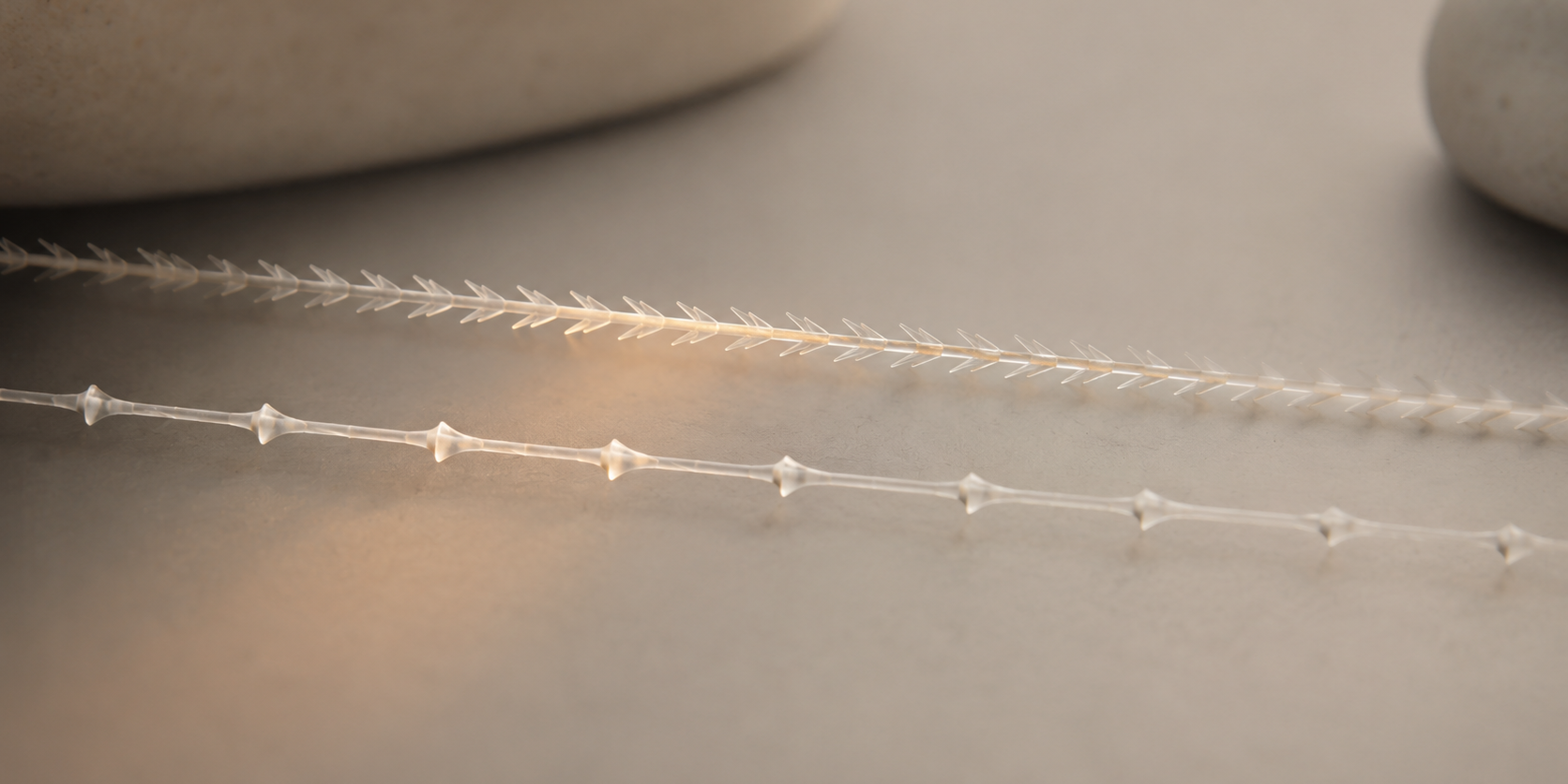
Quick answer: A thread lift in Korea uses dissolvable threads to lift sagging skin and stimulate collagen. Choosing the right one depends less on “which clinic is best” and more on matching the
thread type — barbed (such as Aptos), coned (such as Silhouette Soft), or smooth — to your skin and degree of sagging. Cost and longevity vary by thread type and number, and individual results vary.
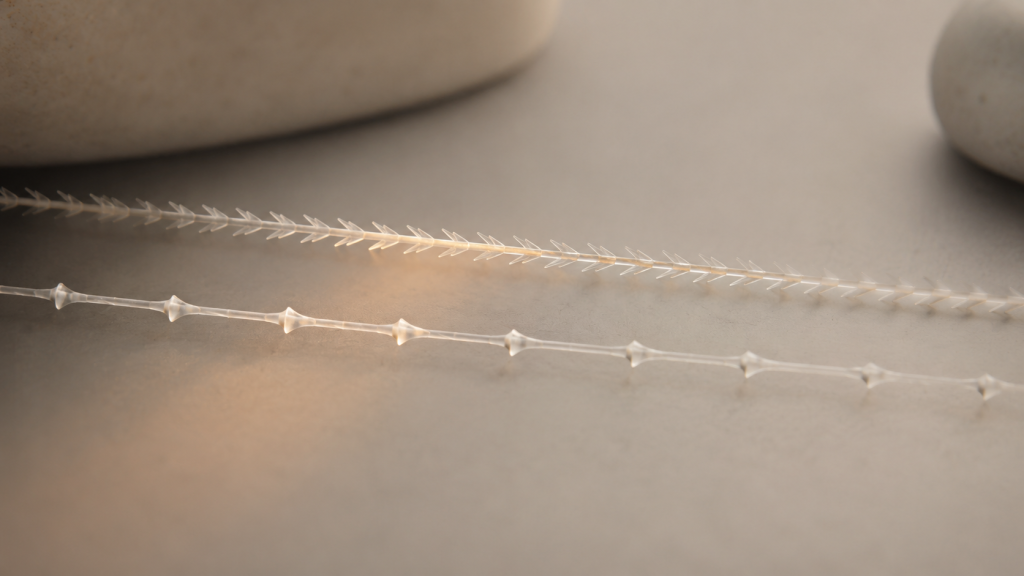
A thread lift in Korea works in two ways: mechanical pull and collagen stimulation
A thread lift is a minimally invasive procedure that inserts dissolvable threads under the skin to reposition sagging tissue. There is no incision or general anaesthesia; the threads are placed through a fine needle or cannula, so recovery tends to be quicker than a surgical facelift.
Threads lift in two ways. First, threads with barbs or cones grip tissue and pull it upward for an immediate mechanical lift. Second, as the thread dissolves, it stimulates the body to produce new collagen, which can improve firmness over the following months.
Because of this, the result depends far more on which thread is used and how it is placed than on the number of threads alone. A thread lift is a technique-dependent procedure that relies on accurate diagnosis and precise placement.
Threads differ by material (PDO, PLLA, PCL) and by structure
The fastest way to understand thread lifts is to separate two questions: what the thread is made of (material) and what shape it has (structure).
| Structure | Common material | How it lifts | Representative brands |
|---|---|---|---|
| Smooth / mono | PDO | Collagen stimulation; minimal mechanical lift | Mono PDO |
| Barbed / cog | PDO, or PLLA/PCL | Barbs grip and pull tissue (mechanical) | MINT, Aptos |
| Coned | PLLA + PLGA cones | Cones anchor, lift and add volume | Silhouette Soft, Definisse |
On the material side, PDO is absorbed in roughly six months and has the longest track record, while PLLA and PCL dissolve more slowly (about 12 to 24 months) and tend to drive more gradual, longer-lasting collagen stimulation. Slower absorption generally means a longer window of collagen activity, though actual duration varies with skin and lifestyle.
Barbed threads like Aptos pull; coned threads like Silhouette Soft anchor and volumize
The two brands patients ask about most illustrate the core difference between barbed and coned threads.
Aptos is one of the original barbed thread systems. Its bidirectional barbs grip the subcutaneous tissue and the SMAS layer, creating immediate mechanical traction that repositions sagging structures. Aptos threads are made from an absorbable copolymer (commonly described as a PLLA and PCL blend) and are often used for jowls, the jawline and the brow tail. Because of the slower-absorbing material, results tend to last longer, though this varies by person.
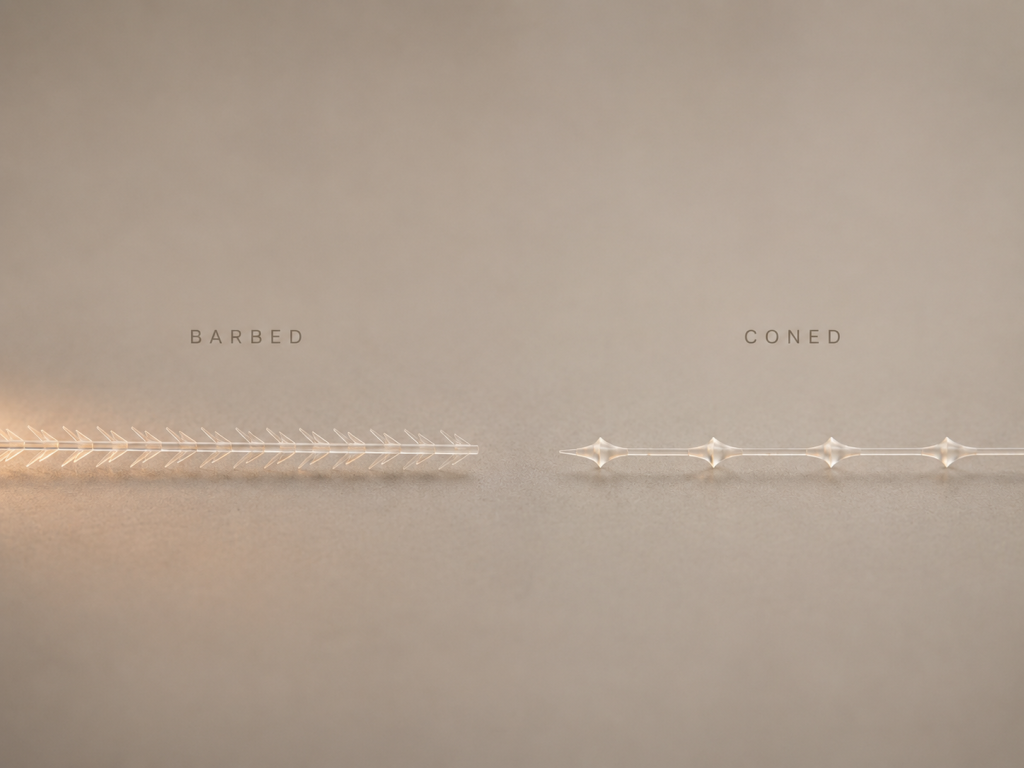
Silhouette Soft takes a different approach. It uses a PLLA thread fitted with bidirectional PLGA cones that grip tissue from both ends and draw it toward the centre, producing a structured lift with a volumizing effect. According to a peer-reviewed review, the PLLA base stimulates gradual collagen production, so improvement often continues over three to six months and results may last up to around 24 months. It is frequently chosen for moderate sagging where a softer, gradual change is preferred.
| Feature | Aptos | Silhouette Soft |
|---|---|---|
| Anchoring | Bidirectional barbs | Bidirectional cones |
| Material | PLLA/PCL copolymer | PLLA thread + PLGA cones |
| Lift character | Firm mechanical pull | Structured lift + volume |
| Often used for | Jowls, jawline, brow tail | Cheeks, moderate sagging |
Neither is universally “better.” Thin skin, for example, may make cones palpable or risk dimpling if placed too superficially, which is why coned threads call for precise placement and trained hands. The right choice depends on your skin thickness, degree of sagging and goals.
Thread lift cost in Korea depends on thread type and number
Cost is driven mainly by the thread material, the number of threads and the treatment area, not by a single flat price. Premium coned or copolymer threads generally cost more per thread than basic PDO.
As a market reference, a thread lift in Korea is often cited in the range of roughly USD 1,500 to 4,500, compared with about USD 2,500 to 6,000 in the United States and about GBP 1,500 to 3,500 in the United Kingdom. A trustworthy clinic provides an itemised, all-inclusive quote after consultation. Prices vary by clinic and individual plan.
At Gangnam Hera Plastic Surgery Clinic, the treating doctor assesses the direction and degree of sagging before selecting thread type and placement, so the plan is set at consultation rather than by a fixed package alone.
A good Gangnam clinic diagnoses your sagging before choosing threads
Once you understand thread types, the criteria for a good clinic become clear. Rather than “who is the most famous,” look for a clinic that:
- Diagnoses first — assesses skin thickness, sagging direction and degree before choosing a thread
- Offers real choice — can combine different materials and structures for your case
- Explains the plan — tells you which thread goes where, and why
- Handles complications — has a clear process for review and revision
- Supports international patients — English-speaking care and a transparent written quote
For visitors travelling to Korea, it also helps to confirm consultation, aftercare and follow-up policy in writing before you book.
Bruising and swelling are common; dimpling comes down to placement
After a thread lift, temporary bruising, swelling, tightness or mild discomfort can occur and usually settle over days. Less commonly, asymmetry, dimpling, palpable or visible threads, or an uneven result can happen, and these are largely influenced by thread placement and technique.
Most people return to light daily activity the next day. Gangnam Hera Plastic Surgery Clinic advises avoiding vigorous exercise, saunas and alcohol for one to two weeks, and not rubbing the treated area or opening the mouth widely. If unusual symptoms persist, contact the treating clinic. Side effects and recovery vary by individual.
A quick self-check before your consultation
Self-check — if two or more apply, a thread lift may be worth discussing at consultation. (Meeting these does not mean you need treatment.)
□ You notice sagging along the jawline, cheeks or nasolabial folds
□ You prefer to avoid surgery and long downtime
□ You are unsure which thread type suits your skin
□ A previous thread lift felt short-lived to you
□ You are travelling to Korea and want a clear, written treatment plan
Frequently asked questions
Is Aptos or Silhouette Soft better?
Neither is better in the abstract. Aptos uses barbs for a firm mechanical pull, while Silhouette Soft uses cones for a structured lift with volume. The right choice depends on your skin and sagging, decided at consultation.
How much does a thread lift cost in Korea?
It is commonly cited in the range of about USD 1,500 to 4,500, depending on thread type, number and area. This is generally lower than the US or UK, but always confirm an itemised quote.
How long do the results last?
It varies by material and individual. PDO threads absorb in roughly six months, while PLLA and PCL threads last longer, often up to 12 to 24 months. Collagen stimulation can extend the effect, but duration cannot be guaranteed.
Is there much downtime?
Downtime is usually short, and many people resume light activity the next day. Bruising and swelling vary by individual, so allow buffer time before important events.
Does it hurt?
Topical or local anaesthesia is used, so discomfort is generally manageable, with some tightness afterward. Pain perception varies from person to person.
Can I combine it with other treatments?
Thread lifts are often planned alongside treatments like skin boosters or energy-based devices. Whether that suits you depends on your goals and is decided at consultation.
In summary — book a consultation
Choosing a thread lift in Korea comes down to matching the right thread — barbed like Aptos, coned like Silhouette Soft, or smooth — to your skin and sagging, placed with care. Understanding thread types first makes your consultation far more productive.
You can check which approach suits your skin at Gangnam Hera Plastic Surgery Clinic, a 5-minute walk from Gangnam Station.
Naver booking · KakaoTalk · Tel +82-2-3443-2237
Written & medically reviewed by
Gangnam Hera Plastic Surgery Clinic — Dr. Kim Jong-seon, MD & Dr. Lee Jong-hoon, MD, Co-Directors
Location 5-min walk from Gangnam Station, Seoul · Published [2026-07-08] / Updated [2026-07-08]
Gangnam Hera Plastic Surgery Clinic
This content is general medical information and does not replace a professional consultation. Effects and side effects vary by individual, and every procedure is decided after an in-person assessment. Please verify local advertising and foreign-patient regulations before publishing.